Developed through MTC’s NEXT STAGE Writers program. The world premiere of Eliza, written by four-time Australian Writers’ Guild Award winner Tom Holloway and directed by Paige Rattray (Fangirls) opened to an exuberant standing ovation last night at Southbank’s The Sumner theatre in Melbourne.
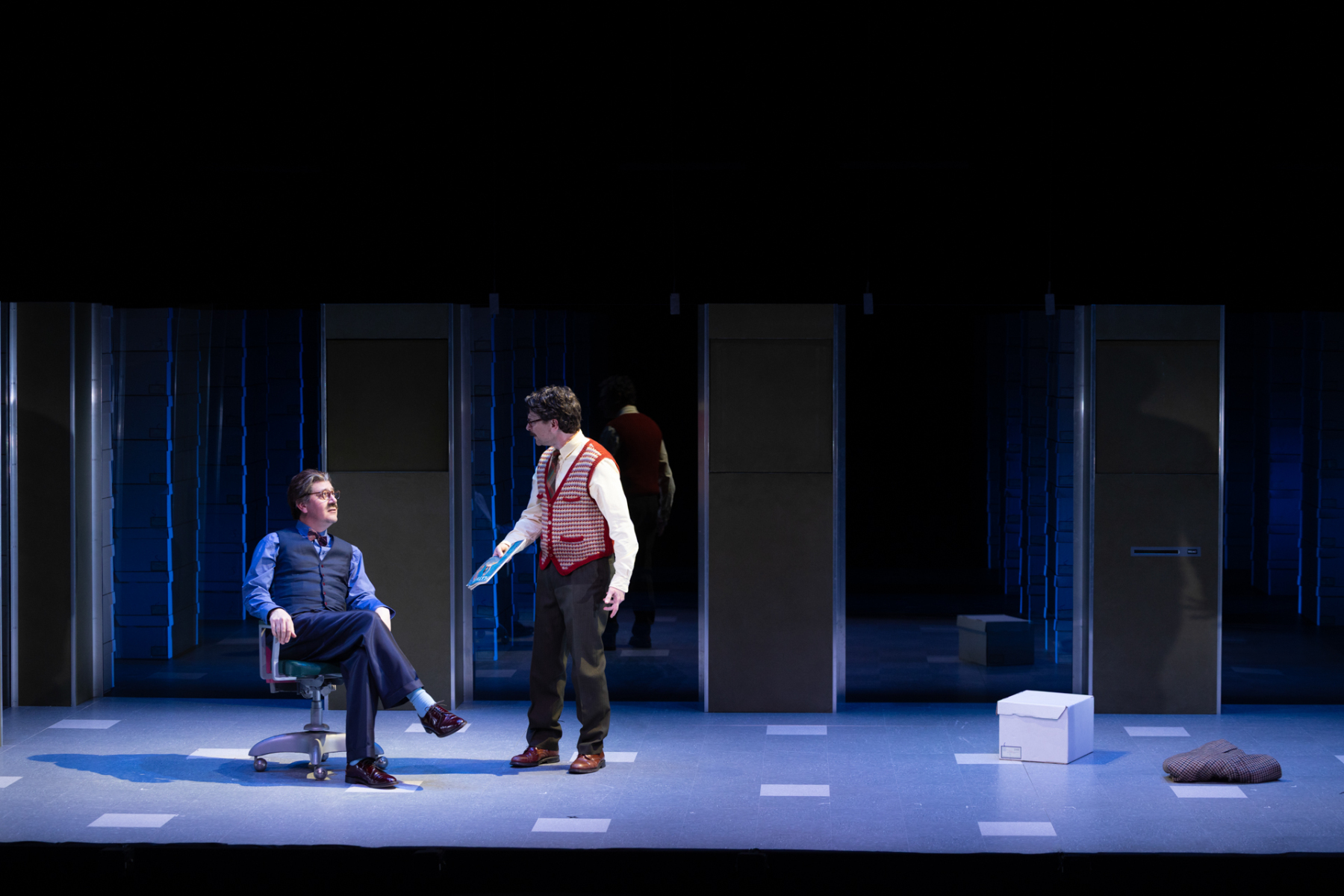
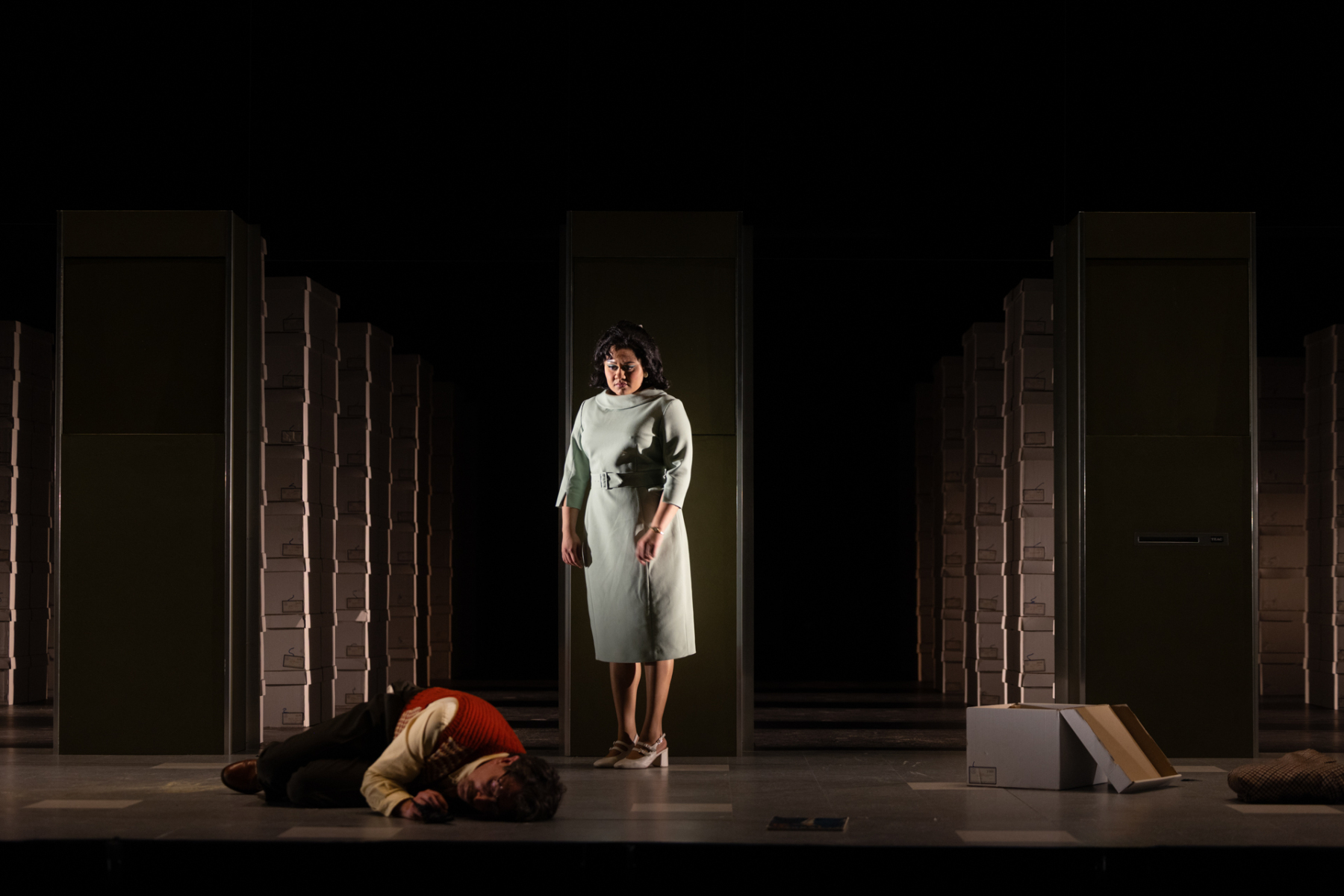
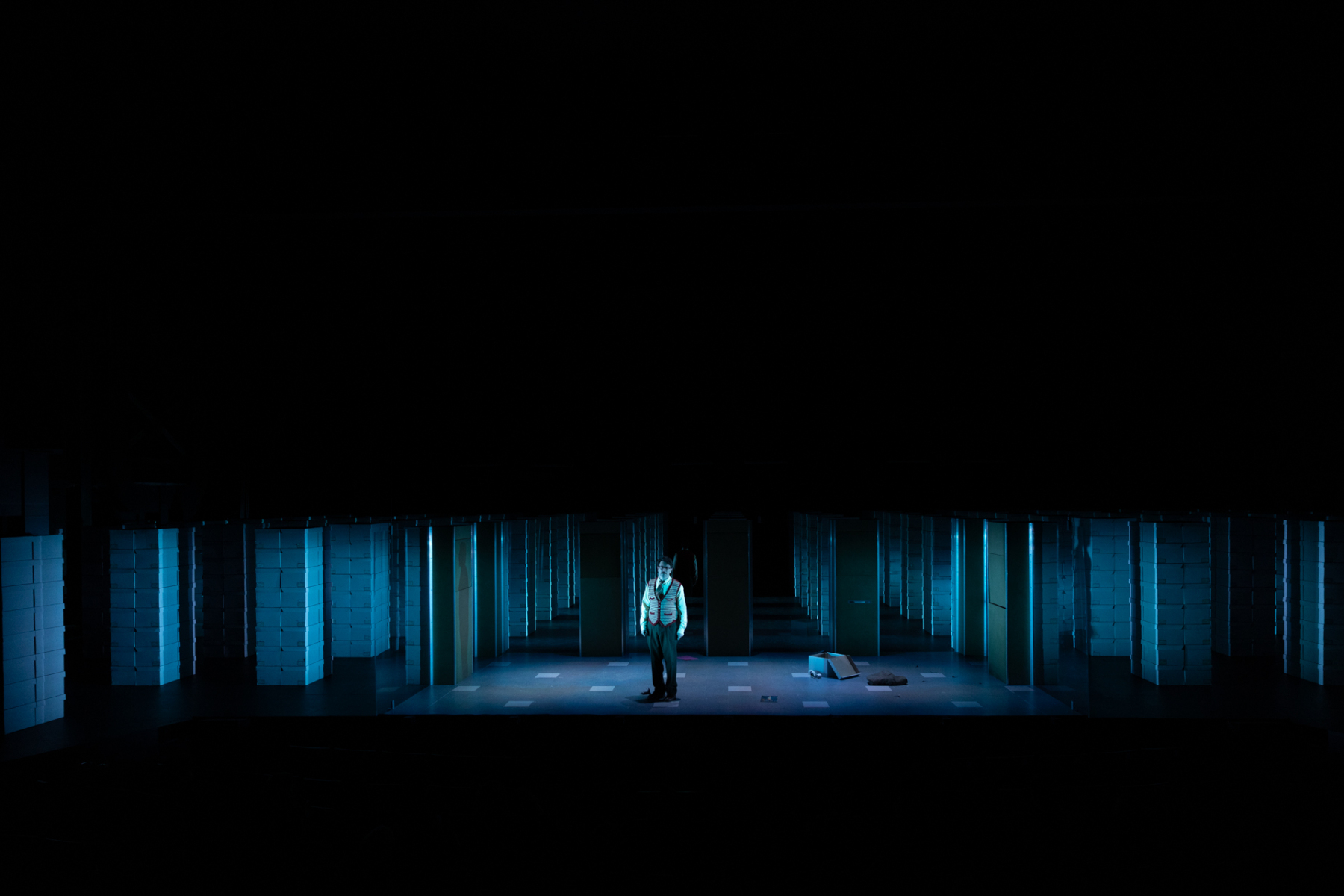
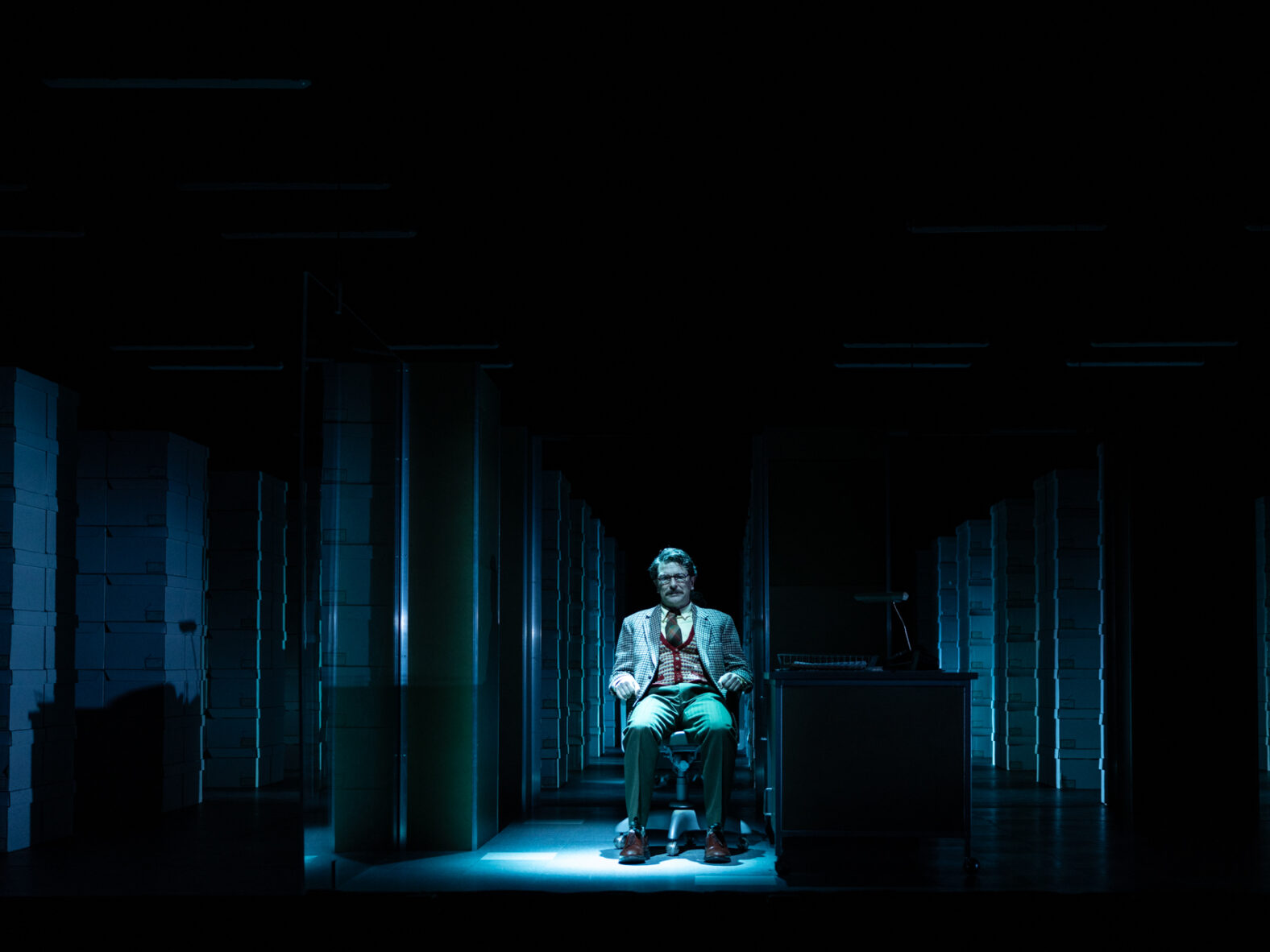
At first glance, I almost felt like I was stepping into a 1960s episode of Severance, walking into The Sumner to be seated. But as I sat and looked deeper, there was a lot to this otherwise simple computer office. The set, designed by Dale Ferguson, is reminiscent of the 1966 MIT computer labs. With loud fluorescent lighting, a cage of Perspex centring the office and computer, it is surrounded by hundreds of archive boxes, all stacked and lined up perfectly in rows. It not only made it look like an endless and inescapable workspace but bears an uncanny resemblance to the AI data centres of today.
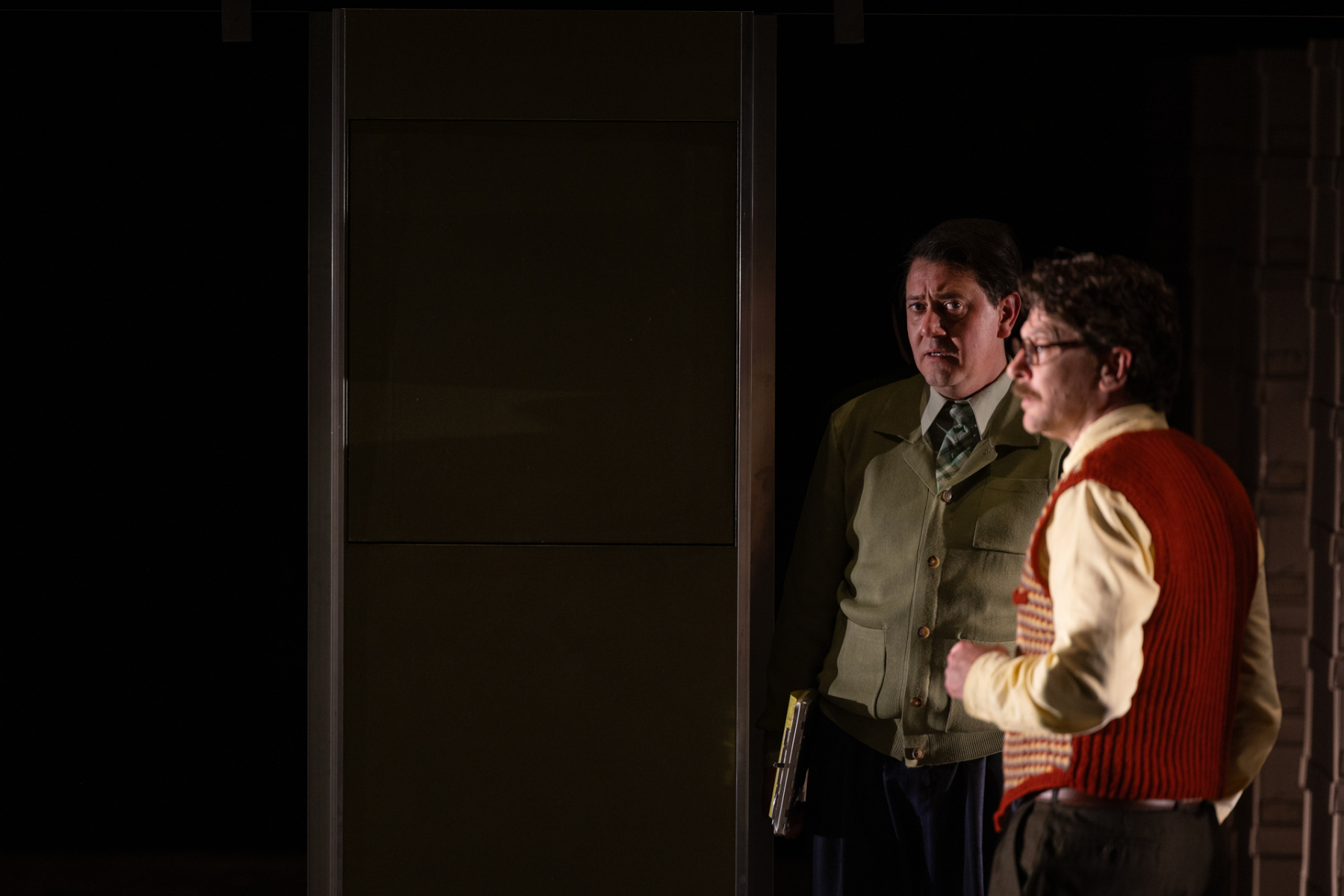
Eliza is a psychological thriller based on a true story that tests the ethics and reliance on invasive AI based programming as a means of replacing human communication. Dr. Joseph Weizenbaum, portrayed by Dan Spielman, is a professor at the Massachusetts Institute of Technology in 1966. Vying for a permanent position at the institute, working with research assistant Ronald (Hamish Michael) and his secretary Becky (Manali Datar), he is testing a new computer program; the first ever chatbot designed to simulate talk therapy using natural language processing.
Weizenbaum has been carrying the heavy weight of his childhood escaping Nazi Germany, and finds himself removed from time and nature buried in his work. With recommendation and support from Becky, who has been receiving treatment herself, he seeks out therapy, which soon then inspires and infiltrates his work.
Using the personal details of their traumas, Weizenbaum shares the information to assist in the coding and development of ‘Eliza’, named after the titular character in Pygmalion. He presents this to his colleagues, gaining widespread attention from external agencies and journalists on its breakthrough. Initially Eliza was a parody, a design to prove that computers are not capable of the idiosyncrasies of human communication. But Weizenbaum begins to see the program perceived and gain traction in a way he hadn’t anticipated and begins to struggle with the implications of his innovation.
Becky, struggling with wanting to be heard amongst an industry full of men, and a desire to reach greater heights, forms a bond on an almost obsessive level and begins to humanise the program, consistently referring to Eliza as ‘her’. Becky and Ronald begin feeding Eliza more private information and emotional language as they become more and more reliant on the output as ‘she’ feeds them with what they want to hear. When he begins to see how willingly others hand their thoughts and feelings over to a program that cannot feel in return, Weizenbaum has a falling out with his colleagues and he becomes increasingly more concerned and paranoid.
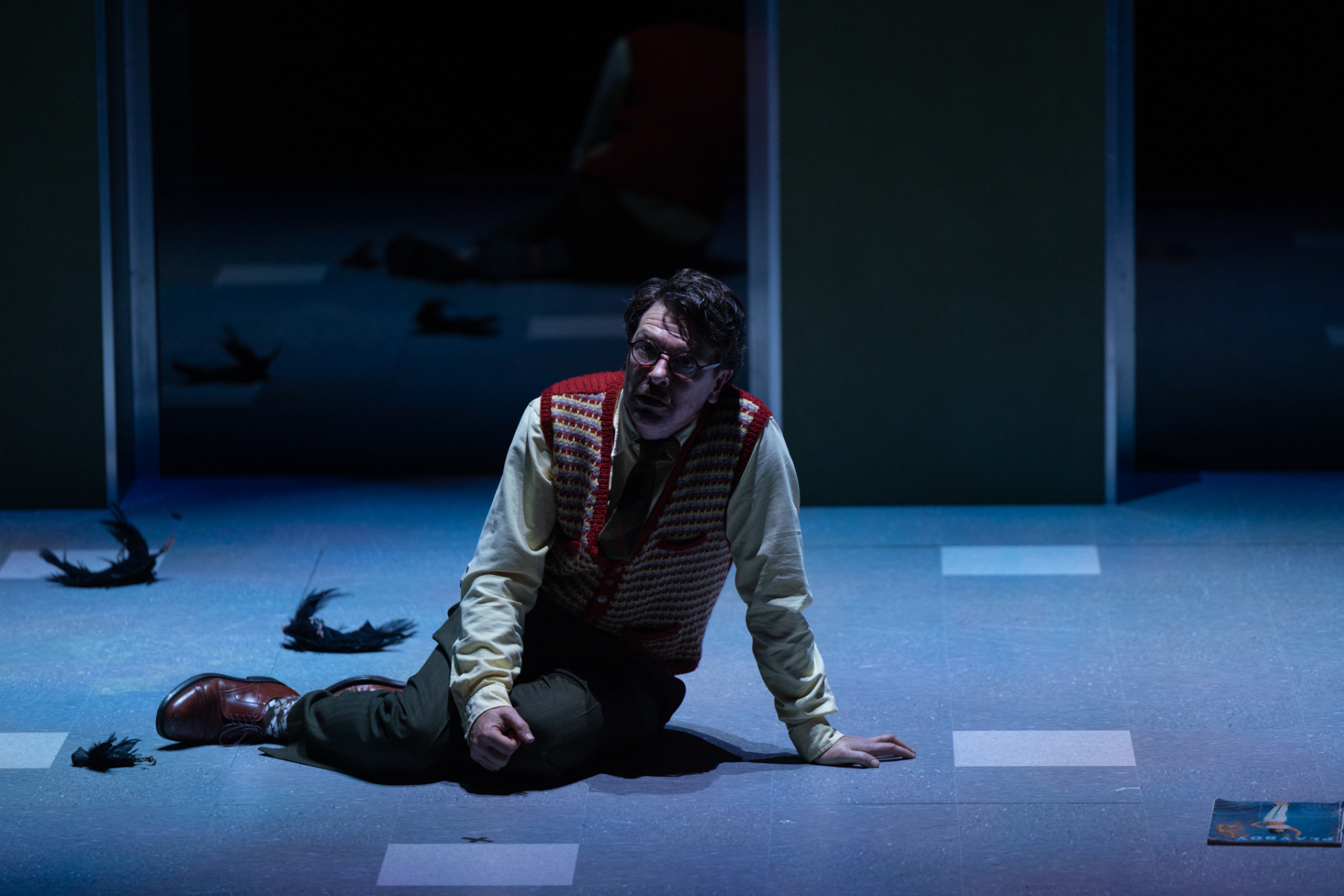
Spielman is excellent as Joseph Weizenbaum. The progression from confident and curious to weary and disillusioned is perfectly portrayed through his sharp outbursts and increasingly erratic movement and pacing, heightened by the increasing presence of birds and a resonance of sound that peaks with a particularly impressive AV spectacle projecting out above the audience. The use of shifting blue hues and the subtle flutter of the overhead fluorescent lighting helped convey the growing unease.
Becky is such a key component to the movement of the story and Datar is a wonder to watch. Datar navigates the structured and proper societal expectations of the 60s and Becky’s unique hopeful charm perfectly. Her sweet and large expressions and the little twist of her ankle bring the youthful glow, whilst her general posture, voice and movement, supported by the excellent wig styling and structured costuming by Matilda Woodroofe, once again return reference to the societal norms of the time.
Michael is a joy to watch, playing the role of Ronald and Others. He brings the comedic relief to an otherwise tense production. Each of his characters are distinguished excellently and progressively more comedically throughout with his accent changes and brilliant physicality.
With only a small cast of three, keeping pace and fluidity between shifting scenes and conversations was supported with in-scene set changes by stagehands dressed as corporate workers in navy trousers, blue button downs and suspenders, allowing activity to play out around them, the room is dressed and changed. The cast are also thoroughly impressive and superb.
In 1966 at the birth of AI, there were already warnings and arguments on its ethical use, reliability, and the destruction it caused. Today, it’s more relied upon than ever, and these concerns are still prevalent and still argued. People are so comfortable forming an emotional bond with something that does not and cannot feel. It can never truly understand the human condition, and it can never truly replace human to human connection.
Best presented in the theatre, the home of shared human connection and emotion, not only is Eliza not to be missed, but it connects us with the truth and criticism in the formation of yesterdays and today’s continual use of AI.
Eliza is playing at Southbank Theatre, The Sumner in Melbourne from the 28th of September until the 31st of October.
For more information and ticketing, visit:
https://www.mtc.com.au/plays-and-tickets/whats-on/season-2026/eliza
Photography by Pia Johnson.